
.jpg?width=770&name=Redmaids_sixthform22%20(8%20of%20106).jpg)
Post-16 education options: What is the IB Diploma?
Date Posted: 27 September, 2021
READ MORE
Earlier this term, our Year 13 Psychology students took part in a unique workshop run in collaboration with researchers from the University of Bristol, giving them the chance to engage directly with a newly published academic study on adolescents’ perceptions of flavoured and unflavoured vapes.
By working with real journal articles, study protocols, consent forms and even raw data, students found the experience both accessible and inspiring. Immy and Olivia described the workshop as “very engaging,” noting how the clear structure encouraged deeper questioning and helped them explore 'more complex arguments' behind the research. They were surprised by how much of the university-level paper they already understood, drawing confidently on their A Level knowledge of research methods and statistics.
Both students commented on how valuable it was to practise analysing methodology, interpreting data, and extracting key information from dense academic writing - skills they know will support them as they prepare for A Level exams and consider future study in psychology. They also left with a clearer idea of what real psychological research involves and how it is used to address contemporary public health issues.
To learn more about how this project came about, what the workshop involved, and why bridging the gap between school and university is so important, we spoke to the Head of our Social Sciences Faculty and A Level Psychology teacher, Mrs Victoria Domone, about her experience leading the initiative.
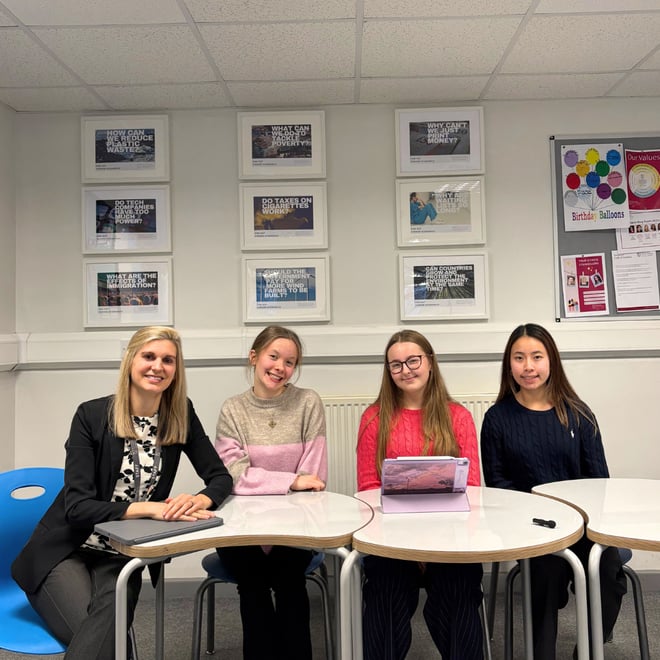
What first inspired you to get involved with the Bristol University research project?
The open research project at the University of Bristol felt like a really exciting opportunity to gain a greater understanding of exactly how modern psychologists working in our very own city to conduct their academic studies. In Psychology lessons we often analyse empirical studies using textbook and internet sources. However, this project allows us to delve much deeper into the protocols involved in planning and conducting psychological research studies with our students. The potential to develop some new teaching resources which could make journal articles more accessible to Sixth Form students was particularly inspiring.
Can you describe what the workshop involved and what the Year 13 students were asked to do?
The workshop involved students trialling some novel teaching resources which had been designed by Psychology teachers alongside the research team at the University of Bristol. These resources allowed the ‘data dissection’ of a very recent study published in 2024 in the academic journal ‘Nicotine & Tobacco Research’. Students had to read and understand exactly how Bristol researchers had conducted a study into subjective perceptions of flavoured and unflavoured vapes amongst adolescents. This is a particularly current and controversial topic area, and research in this field is being used to inform public health officials.
What kinds of academic materials or journal articles did the students work with?
Students had links to the original published journal article and the open data resources, including the original consent form, debriefing form, study protocol and raw data sets. Using our new resources, students were guided as to how to extract key information from these formal documents to understand the methods and results of the study.
What skills were the students practising during the session (e.g. critical thinking, interpreting data, understanding scientific structure)?
Students practised skills in critical thinking, interpreting raw data, statistical analysis and understanding formal reporting conventions in Psychology.
Why is bridging the gap between A Level and Degree level Psychology so important?
Students should be fully informed about what undergraduate study of Psychology is like in their A Level year in order to make an informed decision as to whether it is the right higher education pathway for them.
What kind of feedback were the researchers looking for from the students?
Researchers were interested in students' experience of the workshop – was the material accessible to them and do they feel more confident in reading and extracting key information from academic journal articles?
How do you think this experience will help students as they prepare for A Level exams and potentially studying Psychology at university?
This activity was designed to demystify university-level study and to introduce students to the real-world applications of psychological research studies.
What do you hope the students took away from this workshop?
I hope students feel more confident reading journal articles. For instance, students now know how to write an abstract, decode a method section and prepare standardised instructions and consent forms in an ethically sound manner.
How does integrating university-style material into lessons demonstrate the School’s forward-looking approach to teaching and learning?
As a forward-looking Psychology Department, we are always looking for ways to challenge our students beyond their classroom studies and equip them with the research skills which will be important to carry out broader assignments at Degree level.
In what ways does the school encourage students to stretch themselves academically through opportunities like this workshop?
At Redmaids’ High we try to promote the ethos that there is no limit to learning within a subject area. In Psychology, staff are committed to staying abreast of recent developments in the subject and introducing new research areas of interest through discussion and further reading.
How does the Social Sciences Faculty create opportunities for students to experience scholarship beyond the curriculum?
Across our Social Sciences Faculty we aim to enrich student knowledge beyond the classroom with the assistance of external speakers who are experts within a range of disciplines.
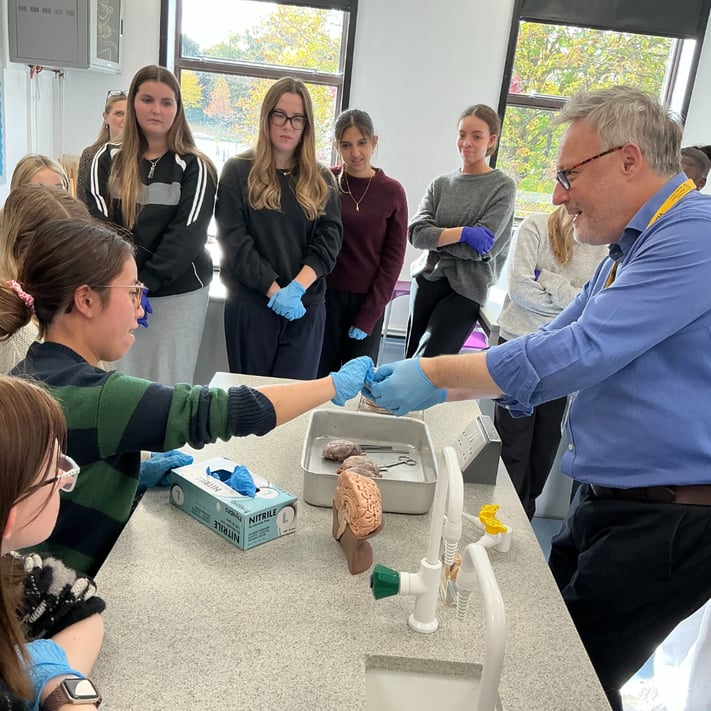
Brain Day Conference with Dr Guy Sutton from the Medical Biology Interactive
The Social sciences mission statement is to:
The Social Sciences Faculty provides students with a dynamic curriculum designed to help them understand how people, communities, and economies function and interact. Our aim is to develop curious and responsible young people who can think critically about the world around them. We cultivate learning through practical activities and experiments, rich topical discussions and independent study.
What are the next steps in the development of these resources?
The next steps are to further refine the teaching resources and trial with some further research studies, which have been conducted by researchers at the University of Bristol. We also need to delve deeper into students' experience of the workshop.
What part of this project are you personally most proud of?
The student learning in the workshop was exceptional. They readily engaged with the new teaching resources, asked insightful questions, worked collaboratively and showed excellent understanding of a complex academic resource. Students understood the urgency of research in this field of health psychology. Redmaids' High has just been judged to be Bristol's leading independent school for academic excellence and we firmly believe initiatives like this will ensure we continue to lead from the front and do the best for our students' learning experience.
To read more about the initiative, click HERE.
To read about our Sixth Form opportunities, click HERE.
-4.png?width=770&name=Untitled%20design%20(2)-4.png)
.jpg?width=770&name=PSHE%20(1).jpg)
.jpg?width=770&name=JS%20Sport%20blog%20post%20(1).jpg)
.jpg?width=770&name=Untitled%20design%20(52).jpg)
-1.jpg?width=770&name=Redmaids_sixthform22%20(34%20of%20106)-1.jpg)


.jpg?width=770&name=Redmaids_sixthform22%20(32%20of%20106).jpg)